
Located in the town of Sharon, Connecticut, the Sharon Historical Society Museum serves as a place where local history is collected, protected, and explained for public understanding. The museum focuses on the everyday life of the community, showing how people lived, worked, and interacted across different historical periods. Through carefully selected objects and documents, the museum presents a factual picture of the town’s development and cultural identity.
Foundation and historical mission
The Sharon Historical Society Museum was established with the goal of preserving materials connected specifically to the town of Sharon. Its mission centers on collecting objects that represent local experiences rather than large national events. This approach allows visitors to see history through familiar environments and personal stories rooted in the region.
The museum operates as a noncommercial historical institution. All collections are preserved for educational and research purposes. Items are donated or transferred from local families and organizations ensuring that materials have a direct connection to the town’s past. Each object is cataloged and stored according to archival standards.
The main objectives of the museum include
- preservation of historical artifacts linked to local life
- Documentation of social and economic changes in Sharon
- maintenance of archival records for research use
- public access to reliable historical information
These goals guide all exhibition and archival activities.
Museum collections and exhibition structure
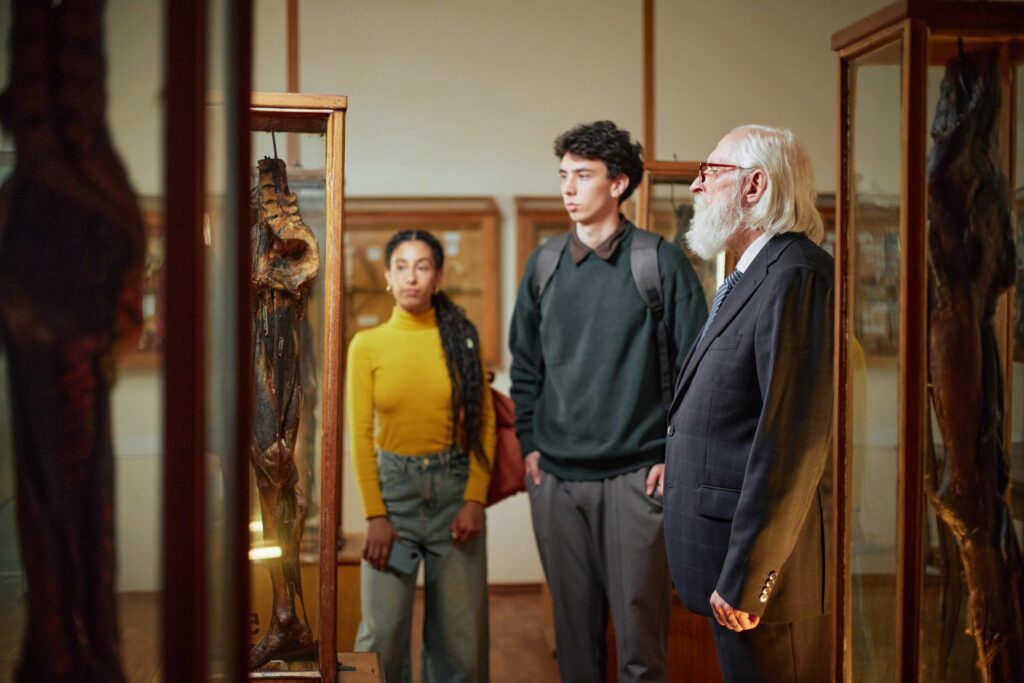
The museum collections include a wide range of physical and written materials. These items help explain how daily routines, work methods, and social relations evolved. Exhibits are designed to be clear and structured, avoiding excessive decoration or interpretation.
Visitors can find objects related to household life, agriculture, education, and local governance. Furniture, tools, clothing, photographs, and handwritten letters appear frequently in displays. Each item is supported by a short explanation that places it in historical context.
Exhibitions are not static. Displays are changed periodically to present different themes or newly acquired materials. This allows repeated visitors to gain new knowledge and helps the museum adapt its content to ongoing research and preservation work.
Interpretation and the informational approach
The museum uses a style that is based on information and references. Explanatory texts are based on facts that are backed up by physical evidence. Avoiding personal opinions and guesses is important. This method has an encyclopedic tone and encourages visitors to make their own judgments based on the information given.
The language used in exhibition texts is clear and simple. This makes it easier for people with different levels of education and language skills to get around. When necessary, historical terms are explained, which makes it easier to understand.
Taking care of and preserving materials
One of the museum’s main jobs is to keep things safe. Many of the items in the collection are old and made of materials that make them easy to break. To keep light, humidity, and temperature changes from damaging the items, they are stored in the right way.
Documents for the archives are kept in a different place than the exhibition spaces. To keep original records safe, access to these materials is limited. When documents are shown, copies may be used to cut down on the amount of time originals are handled.
Educational and research role
The Sharon Historical Society Museum functions as a local research center. Students, historians, and residents use the museum to study aspects of Sharon’s past. Research topics often include family histories, land use, architecture, and community organization.
Educational activities are based on original sources rather than secondary summaries. This allows learners to work directly with historical evidence. Such an approach strengthens critical thinking and historical literacy.
Common research uses of the museum include:
- genealogy and ancestry studies
- Examination of town development patterns
- analysis of agricultural and economic change
- Study of social traditions and institutions
The museum supports these activities by maintaining organized records and providing contextual explanations.
Cultural importance in the community
The museum is a big part of keeping the memory of the community alive. Without organized preservation, historical knowledge can quickly fade away in small towns. The museum tries to stop this from happening by gathering things before they are thrown away or forgotten.
The museum brings attention to experiences that are often left out of larger historical accounts by focusing on local stories. This helps people get a better picture of how history and social change have affected the region.
The museum is also a good place to learn about how things stay the same and how they change. Visitors can compare how people lived in the past with how they live now by looking at long-term patterns instead of single events.
Visitor experience and how the space is set up
The museum’s physical layout is small and neat. The exhibition rooms are set up so that it makes sense to move from one theme to another. Visitors can easily find their way around the space thanks to clear signs.
The museum’s atmosphere is quiet and focused on learning. There isn’t much noise or other things going on, which helps with focused observation. There may be places to sit for visitors who want to read or think about the information on display.
Labels for exhibitions are put at a height where people can read them and are written in simple language. This makes sure that visitors can interact with the content without needing any extra help.